
Understanding Legal Permanent Resident Cancellation of Removal
A Guide for Green Card Holders in Immigration Court
Overview of protection types
What is LPR Cancellation of Removal?
LPR Cancellation of Removal is a form of immigration relief that may help you keep your green card if you are in deportation proceedings (also called removal proceedings). If granted, it forgives the issue that put you in deportation proceedings and allows you to keep your permanent resident status.
Important things to know first
- This relief is ONLY available if you are already in immigration court proceedings
- You cannot apply for this on your own – it is only a defense you can use in court if you are facing deportation
- Working with an immigration attorney is strongly recommended due to the complexity of these cases


Am I eligible? You might be eligible if all of these are true:
- You have been a lawful permanent resident (green card holder) for at least 5 years
- You have lived in the United States continuously for at least 7 years after being admitted in any status (such as on a visa, or as a permanent resident)
- You have NOT been convicted of an “aggravated felony”
- You obtained your green card legally (not through fraud)
- The immigration judge believes you deserve this relief as a matter of discretion based on the positive factors in your case
Important rules about the time requirements
- The 5 years as a permanent resident: This time continues to count even after you are put in removal proceedings
- The 7 years of continuous residence. This time STOPS counting when either:
- You are served with the Notice to Appear (the document that starts your court case), OR
- You commit certain criminal offenses
What could make me ineligible?
You CANNOT apply if:
- You have been convicted of an “aggravated felony” (this is a specific immigration law term – ask an attorney if you’re unsure if your conviction qualifies)
- Some examples include, murder, drug trafficking, firearms trafficking, sexual abuse of a minor, crime of violence with 1-year sentence, theft or burglary with 1-year sentence, fraud over $10,000
- You obtained your green card through fraud
- You have persecuted others
- You have certain terrorist-related grounds of removability
- You have already received this type of relief before
Application process
- You will need to submit Form EOIR-42A
- Current filing fee: $700 and biometrics fee: $30 (as of September 2025) – fee waivers may be available
- You must submit supporting documents
- You will have a hearing where you present your case to an immigration judge
Important considerations
- This is a complex area of law with many technical rules
- The process can take several years
- Success depends heavily on your specific circumstances
- You may only receive this form of relief once in your lifetime
What will the judge consider?
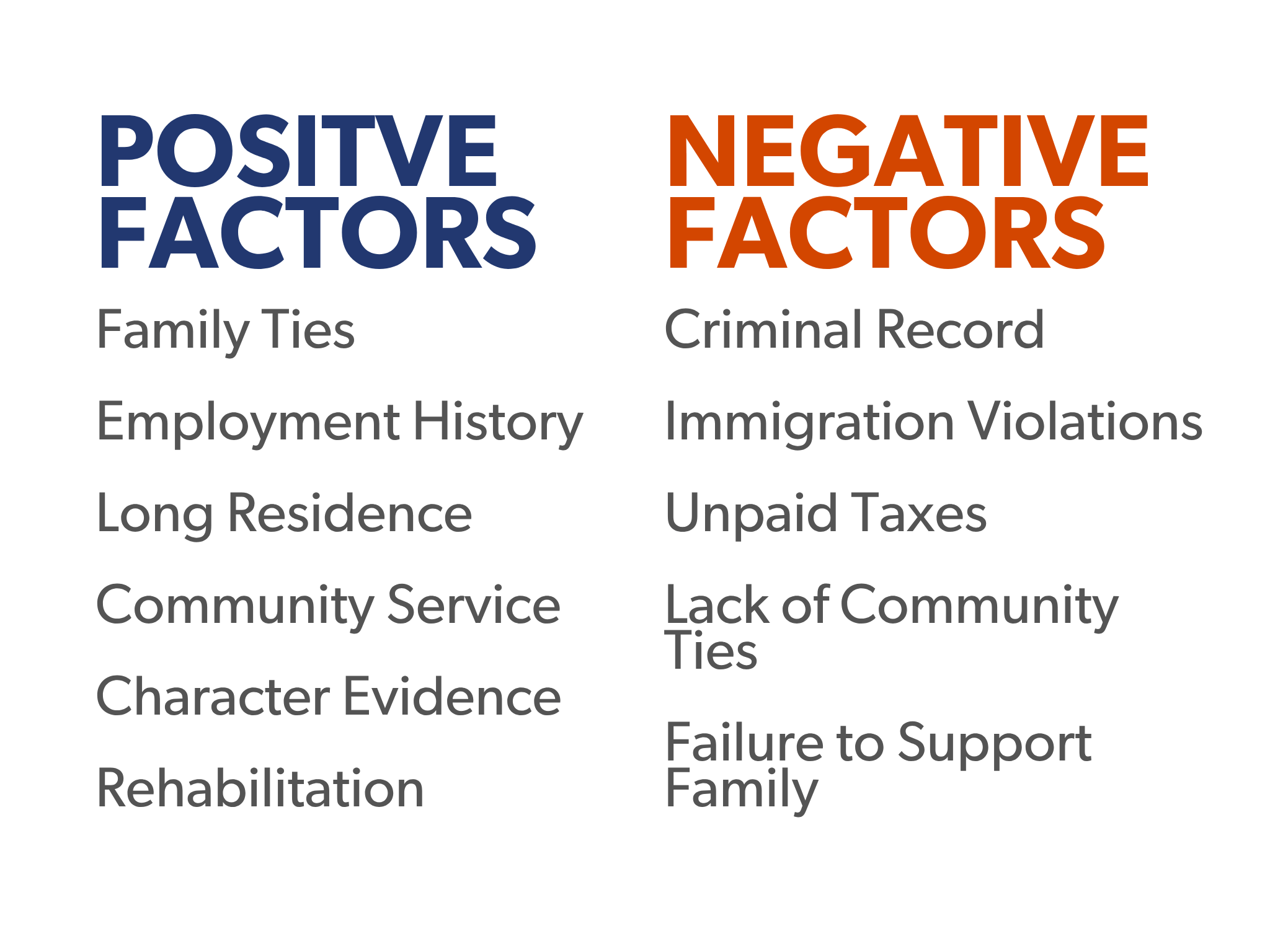
The judge will look at both positive and negative factors in your case to decide if you deserve this relief.
Some important positive factors include:
- Family ties in the United States
- Long residence in the country
- Evidence of hardship to you and your family if you were deported
- History of employment
- Property or business ties
- Community service and involvement
- Rehabilitation (if you have any criminal history)
- Good character evidence (letters of support, etc.)
Some important negative factors include:
- Criminal record
- Immigration violations
- Lack of community ties
- Failure to pay taxes
- Failure to support family
What documents should I gather?
Proof of 5 Years as a Legal Permanent Resident:
- Copy of your green card
- Proof of when you got your green card
Proof of 7 Years Continuous Residence:
- Tax returns
- Employment records
- School records
- Bills and leases
- Medical records
- Bank statements
- Any documents showing your presence
Good Character Evidence to help with Judge’s Discretion:
- Letters from employers
- Community service records
- Church/religious participation
- Letters from family and community members
- Proof of paying taxes
- Certificates from any programs or classes
Next steps
- If possible, consult with an immigration attorney to evaluate your case
- Start gathering documents
- Keep copies of everything you submit
- Never miss a court date
- Be careful of notaries or others who aren’t licensed attorneys
Warning about criminal issues
If you have ANY criminal history, including arrests where the charges were dismissed, it’s extremely important to speak with an immigration attorney before applying. Even minor criminal issues can have serious immigration consequences and affect your eligibility. If you have additional questions or concerns, please contact our office for further assistance.