Want to stay in the loop? Subscribe here to get the latest updates on the Business Immigration Benchmark podcast and more!
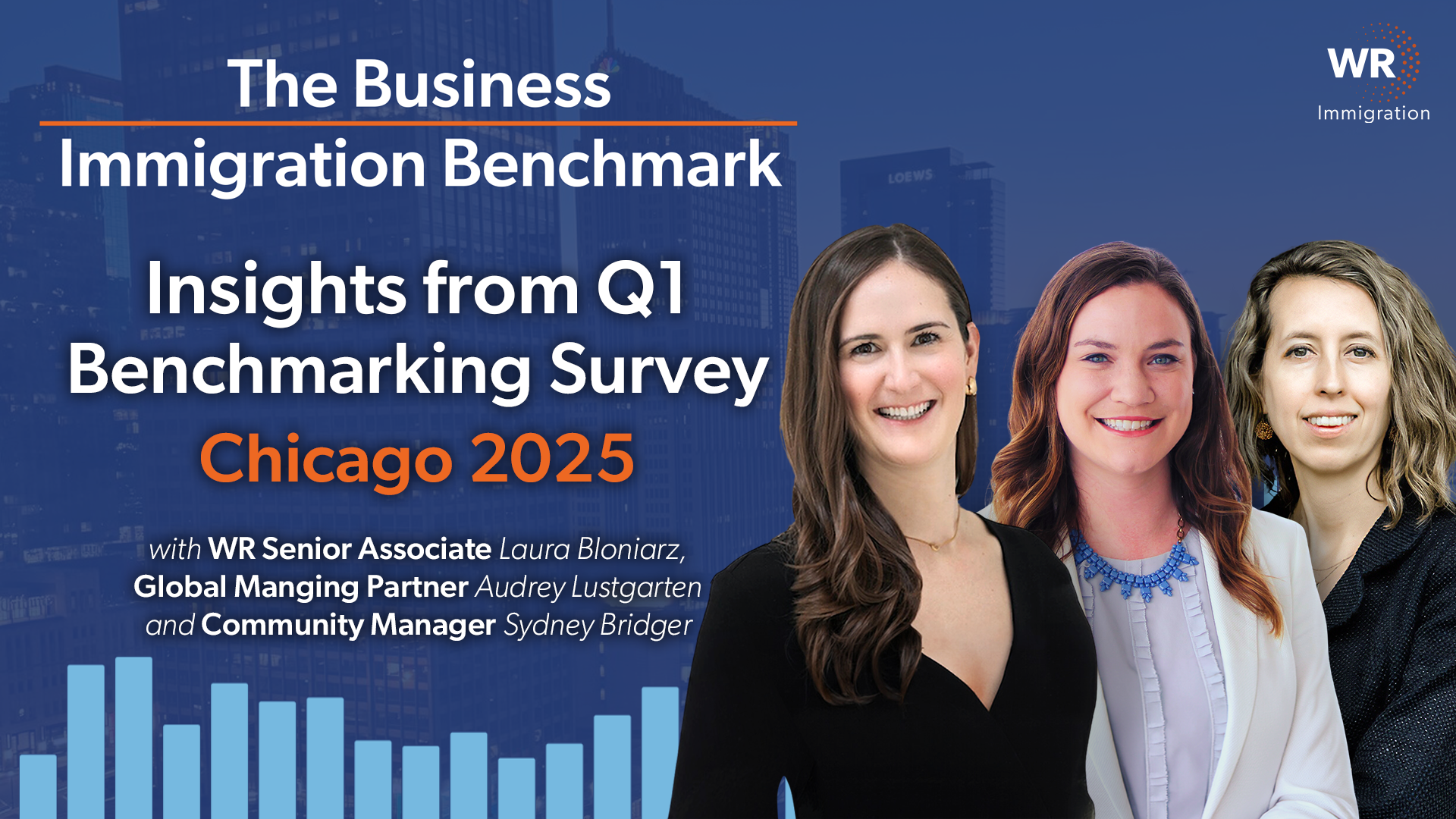
In this week’s episode of “The Business Immigration Benchmark,” I had the opportunity to sit down in the same room with Audrey Lustgarten and Sydney Bridger, SHRM-SCP to discuss key takeaways from the latest ‘Communication & Change Management Q1 2025’ survey.
For global mobility professionals navigating uncertainty, this episode provides actionable insights into how technology, compliance, and change management are shaping industry priorities.
Key Takeaways:
1. Navigating Complex Immigration Policies
Keeping Up with Regulatory Changes: The survey and our conversation highlighted the frequent shifts in immigration regulations and the importance of staying informed. Compliance was the clear priority for Global Mobility leaders that emerged from our Q1 benchmarking survey. From changes in visa processing to new compliance requirements, businesses must be proactive in understanding how these updates impact their workforce.
Best Practices for Compliance: One major point of discussion was how companies can develop internal policies that align with the latest immigration laws. Audrey shared strategies for maintaining accurate documentation, working closely with legal teams, and leveraging technology to streamline case management.
2. The Role of Technology in Business Immigration
Automation & Efficiency: With the increasing complexity of immigration processes, technology plays a crucial role in helping companies manage their workforce efficiently. We discussed how tools like case tracking software and automated compliance solutions can reduce administrative burdens and minimize errors.
Data-Driven Decision Making: We emphasized the importance of leveraging data to predict workforce trends, track visa renewals, and manage sponsorship costs more effectively. Companies that adopt a data-driven approach can make more informed strategic decisions about their global talent mobility.
3. Addressing Workforce Challenges & Employee Experience
Supporting Employees Through the Immigration Process: One of the key themes we touched on was how HR and mobility teams can improve the employee experience by providing clear communication and resources. Navigating immigration can be stressful, and having a structured support system in place can make all the difference.
Future Outlook on Talent Mobility: Looking ahead, we discussed insights on how companies can prepare for shifts in the global talent market. With increasing competition for skilled workers, businesses need to prioritize flexibility in their immigration policies and consider alternative visa options where necessary.
My Parting Thoughts
Our discussion underscored the importance of adaptability in today’s evolving immigration landscape. Whether it’s keeping up with policy changes, leveraging technology for efficiency, or enhancing the employee experience, proactive planning is key.
If you have insights or strategies you’d like to share, feel free to DM me on LinkedIn or submit a question here!

Subscribe to the WR Immigration Newsletters

Start the RFP Process

Join the Corporate Benchmarking Roundtable